
Quick answer
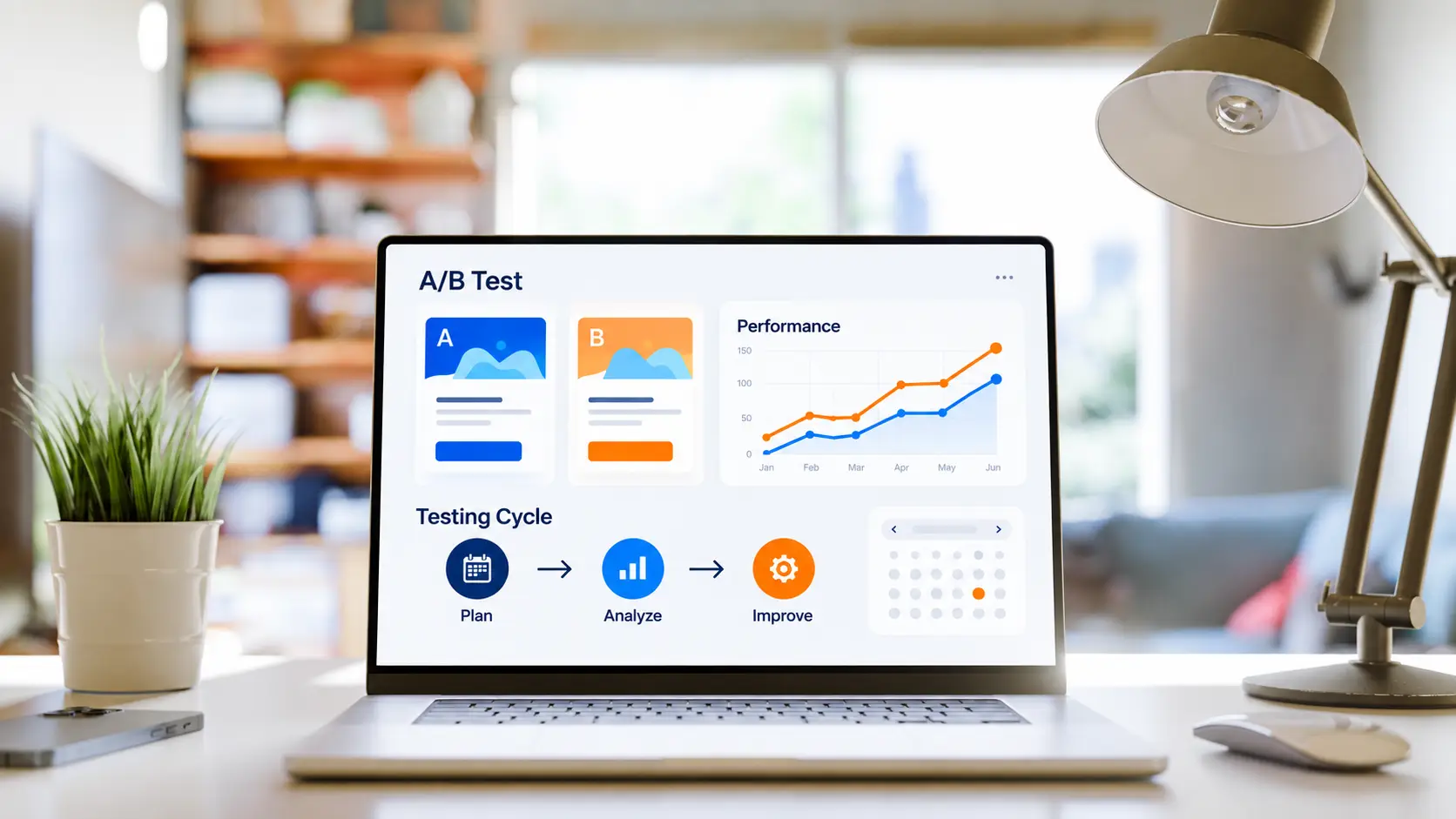
How often you should test landing pages depends on your traffic volume and testing capacity. High-traffic pages (several thousand visitors per month or more) can support a new test every two to four weeks. Lower-traffic pages may need four to eight weeks per test to reach statistical significance. The principle is to always have at least one active test running on your most important conversion pages - continuous testing is what produces compounding conversion improvement over time.
The Case for Continuous Testing
Landing page conversion rates do not improve by themselves. Without active testing, a page tends to stay at whatever conversion rate it was at when it was last updated. With active testing, conversion rates improve progressively - each test produces a win or a learning, and both outcomes are valuable. This ongoing optimization is especially important within a broader predictable revenue growth strategy, where better conversion efficiency helps turn acquisition traffic into more qualified pipeline.
The businesses with the highest-converting landing pages did not get there through a single redesign. They got there through months or years of continuous testing that incrementally improved performance. The compounding effect of multiple 10 to 20 percent gains through individual tests produces conversion rates that are dramatically better than the original baseline.
How Traffic Volume Determines Test Frequency
Statistical significance - the point at which a test result is reliable - requires a minimum number of conversions in each test variation. The faster your page reaches that threshold, the sooner a test concludes and the sooner you can move to the next hypothesis.
A landing page receiving 5,000 visitors per month with a 3 percent conversion rate generates 150 conversions per month. Depending on the size of the conversion rate difference you are trying to detect, a test might reach significance in two to four weeks. You could run twelve to twenty-four tests per year on this page.
A page receiving 500 visitors per month with a 2 percent conversion rate generates 10 conversions per month. The same test might take three to four months to reach significance. You can run three to four tests per year.
What to Test and in What Order
Prioritize tests by their potential impact. Headlines have the highest leverage - test these first. CTA text and placement come next. Form length. Social proof placement. Page layout and visual hierarchy.
Once high-leverage elements have been tested and optimized, move to more specific elements. There is always something worth testing, but the return per test tends to diminish as the big wins have been captured. These improvements also strengthen the broader lead generation process by increasing the percentage of visitors who become identifiable leads and eventually move into qualification and sales follow-up.
What to Do When Traffic Is Too Low for A/B Testing
For pages that cannot reach statistical significance in a reasonable timeframe, qualitative research provides the most actionable direction. User interviews with your target audience, heatmap analysis, session recordings, and expert review of the page against conversion best practices - these methods identify improvement opportunities without requiring statistical testing.
The improvements from qualitative research can then be implemented directly, and the page can be monitored for overall conversion rate changes rather than through formal testing.
Frequently Asked Questions
How often should you test landing pages?
As often as your traffic volume allows tests to reach statistical significance in a reasonable timeframe. High-traffic pages can support a new test every two to four weeks. Lower-traffic pages may need four to eight weeks per test. The goal is to always have at least one active test on your most important pages.
How long should a landing page test run?
Until it reaches statistical significance at your chosen confidence level (typically 95 percent). Use a sample size calculator before starting to estimate how long this will take at your current traffic and conversion rates.
What if my traffic is too low to run meaningful A/B tests?
Focus on qualitative research - user interviews, heatmaps, session recordings, and expert review. Implement the most obvious improvements based on this research and monitor overall conversion rate changes. Start formal A/B testing once traffic volumes support it.
Does LeadStrong manage ongoing landing page testing?
Yes. LeadStrong runs continuous testing programs on client landing pages as part of its growth marketing engagements, managing the full cycle of hypothesis development, test setup, analysis, and implementation.
Ready to build a continuous landing page testing program?
Book a free strategy call