
Lead qualification is one of those disciplines that every B2B business knows it should do well and most do inconsistently. Without a clear, shared qualification process, sales teams waste time on leads that were never going to convert, marketing gets blamed for poor lead quality, and the CRM fills up with opportunities that are not really opportunities.
Here is how to build a qualification process that actually works.
Define Qualification Criteria Before Any Leads Come In
The most common qualification failure is not having a shared definition of what a qualified lead looks like before campaigns launch. Marketing generates leads. Sales gets handed them and makes its own assessment. The two assessments differ. Friction follows.
Qualification criteria should be agreed in writing before any program goes live. At minimum, define the firmographic fit criteria - the industry, size, geography, and job title characteristics that describe your ideal customer. Then define the behavioral signals that indicate readiness - what actions a prospect needs to have taken to be considered ready for a sales conversation.
Use BANT as a Starting Framework
BANT - Budget, Authority, Need, Timeline - is the most widely used B2B qualification framework because it covers the four questions that most consistently predict whether a prospect will convert.
Budget: does the prospect have financial capacity for a solution like yours? This does not require an exact number but a sense of whether they are in the right ballpark.
Authority: are you speaking to someone who can influence or make the purchasing decision? A very interested person with no buying authority is not a qualified lead.
Need: is there a genuine, active problem your solution addresses? Not a theoretical need - an active one they are trying to solve now.
Timeline: is there a realistic timeframe for moving forward that fits your sales cycle? A prospect who is twelve months from being ready is a nurture candidate, not an active opportunity.
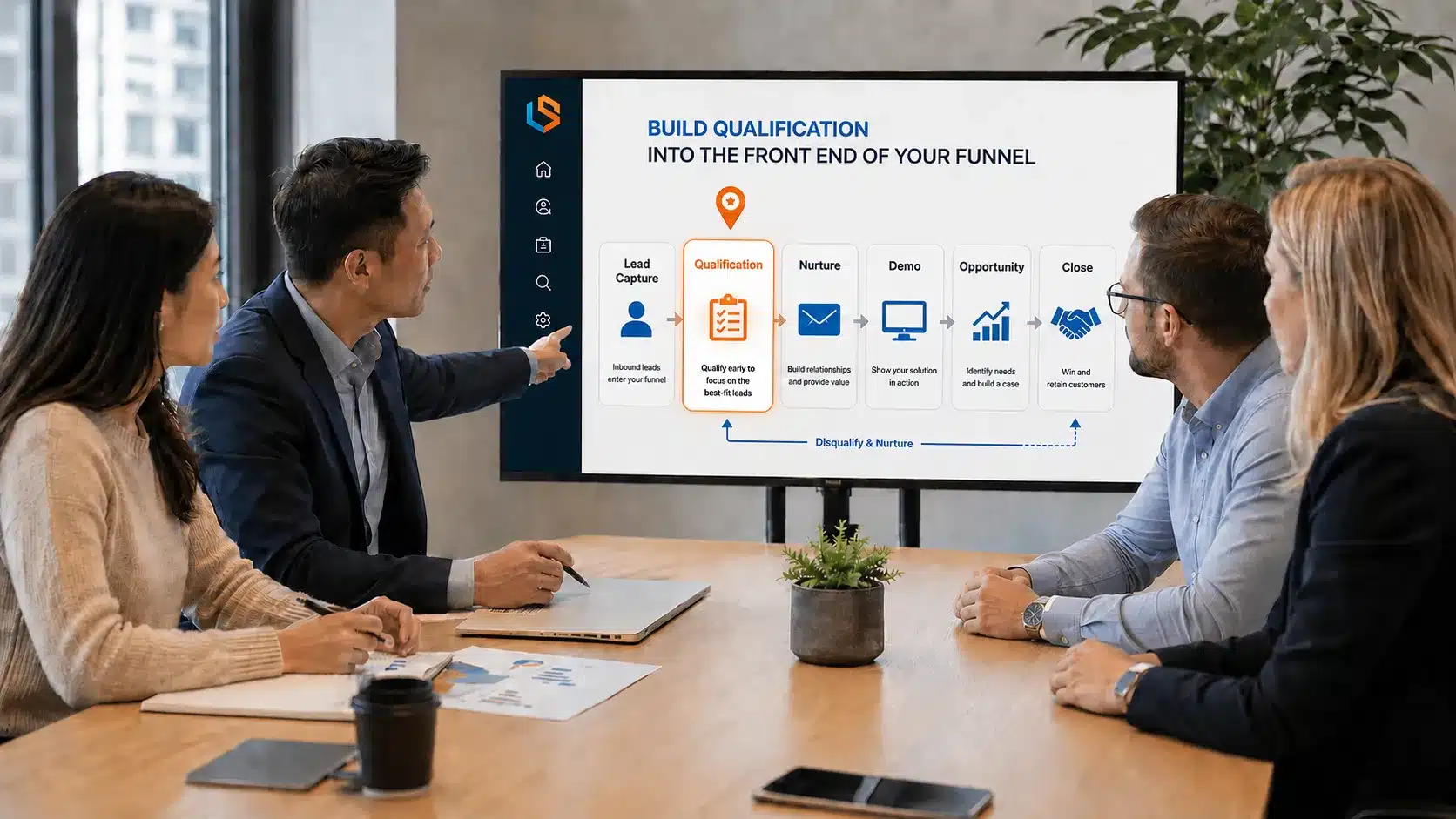
Build Qualification Into the Front End of Your Funnel
Waiting until the first sales call to qualify a lead is expensive. The earlier in the funnel you can filter out poor fits, the less sales time gets wasted.
Qualification starts with targeting. LinkedIn campaigns targeting specific job titles and company sizes pre-qualify at the audience level. Lead capture forms that ask for company name, role, and company size provide basic firmographic data before any human contact.
Your lead nurture content also qualifies. Prospects who read your detailed implementation guides and pricing pages are demonstrating more intent than those who downloaded a top-of-funnel awareness piece. Lead scoring can formalise this - assigning points by behavior and surfacing the highest-intent leads to sales.
Give Sales the Right Information at Handoff
When a lead is passed to sales, they should receive the full context of that lead's engagement - which pages they visited, what they downloaded, where they came from, and any form responses that indicate their needs or timeline. A sales rep who can reference a prospect's specific behavior in the first outreach is starting from a much stronger position than one starting cold.
Frequently Asked Questions
What is the best framework for B2B lead qualification?
BANT (Budget, Authority, Need, Timeline) is the most widely used starting framework. MEDDIC is more appropriate for complex enterprise sales. The best framework is the one your team uses consistently and that connects to your actual conversion data.
How do you qualify B2B leads without a discovery call?
Through targeting precision that limits your audience to your ICP, lead capture forms that collect qualifying information, lead scoring that prioritizes by behavioral signals, and content that naturally attracts the right stage and profile of buyer.
What information should marketing provide to sales when handing off a qualified lead?
At minimum: company name and size, contact's role and seniority, lead source, pages visited and content downloaded, and any form responses that indicate need or timeline. The more context sales has, the more relevant the first outreach.
Ready to build a B2B qualification process that improves your close rate?
Book a free strategy call