
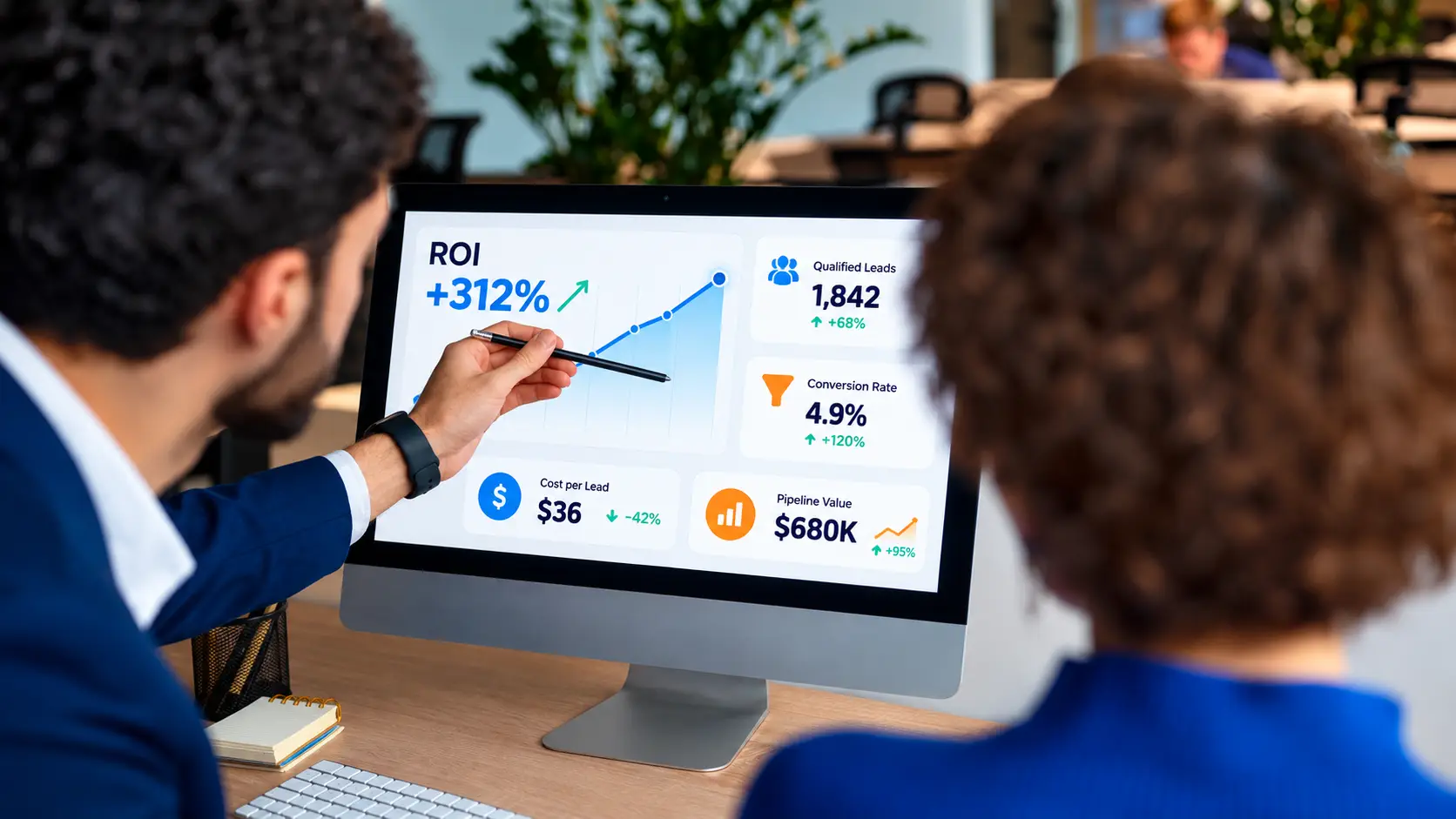
Performance marketing ROI is easier to calculate than most marketing investments because the measurement infrastructure - conversion tracking, attribution, lead source data - is built in from the start. What varies significantly is how long it takes to achieve positive ROI and what the realistic magnitude of that return looks like.
The ROI Calculation for Performance Marketing
Start with your average customer value and your close rate from qualified meetings. If a customer is worth $15,000 and you close 20 percent of qualified meetings, a qualified meeting is worth $3,000 to your business.
A performance marketing program generating ten qualified meetings per month at a total cost of $6,000 (agency fees plus media spend) has an expected monthly revenue contribution of $30,000. That is a 5:1 return before accounting for customer lifetime value beyond the initial contract.
The calculation depends on the accuracy of your close rate and customer value figures. These are the inputs worth spending time on before modeling ROI expectations.
Timeline to Positive ROI by Stage
In the first four to six weeks, campaigns are live and generating initial data. Leads are coming in but at a higher cost per lead than the optimized program will eventually produce. Positive ROI from month-one spend alone is unusual.
By months two to three, campaigns have been optimized based on initial performance data. Cost per qualified lead has typically decreased from the starting point. For businesses with shorter sales cycles, initial closed revenue from early leads may be appearing.
By months four to six, a well-managed program is generating consistent qualified leads at an optimized cost per lead. For most B2B businesses, this is where the ROI calculation becomes clearly positive when accumulated results are measured against accumulated program costs.
What Affects ROI
Sales cycle length is the most significant variable. A business closing deals within four to six weeks of the first marketing touchpoint sees financial ROI much sooner than one with a six-month sales cycle.
Sales follow-up quality has a direct impact. Leads followed up quickly and with relevant, personalized outreach convert to meetings at higher rates. The same lead program produces different revenue outcomes depending on sales execution.
Frequently Asked Questions
What ROI should I expect from performance marketing?
For a well-run program with correct targeting and active management, most B2B businesses achieve a positive ROI (revenue exceeding total program cost) within three to six months. The specific return depends on your customer value, close rate, and sales cycle length.
How do I know if my performance marketing program is on track for positive ROI?
Track cost per qualified lead monthly and compare to what a qualified lead is worth to your business. If the cost is below the value, the ROI direction is positive - even before closed revenue confirms it.
Does LeadStrong model ROI expectations before engagement?
Yes. LeadStrong works through the ROI calculation with prospective clients based on their customer value, close rate, and pipeline goals before recommending a program investment level.
Ready to model the performance marketing ROI for your business?
Book a free strategy call