
Quick answer
B2B lead generation targets businesses and the decision-makers within them, involves longer buying cycles with multiple stakeholders, and prioritizes lead quality and relationship building over volume. B2C lead generation targets individual consumers, typically involves shorter and simpler purchasing decisions, and often prioritizes volume and conversion speed. The channels, messaging, and metrics that work for each are fundamentally different.
Understanding this distinction helps businesses apply the right strategy to their specific context - and avoid the mistake of treating B2B lead generation as just a more expensive version of consumer marketing.
The Audience Difference
In B2B, your audience is not a person making a personal purchase decision. It is a professional representing an organization, operating within a budget approved by someone else, accountable to colleagues who will use what they buy, and subject to procurement processes and approval chains that vary in complexity by company size.
This changes everything about how you communicate with them. A B2B buyer is researching to make a defensible business decision, not an impulse purchase. Your content and messaging need to address business value, risk reduction, and ROI - not lifestyle or personal desire.
In B2C, the audience is an individual making a decision primarily for themselves. The emotional and personal dimensions of the decision are more prominent. The research cycle is shorter. And the criteria for choosing are often more intuitive and less analytical.
The Channel Difference
LinkedIn is the definitive B2B paid channel because it is where business professionals identify with their professional roles and engage with business-relevant content. It has no real equivalent in B2C.
Google Search works for both B2B and B2C, but the keyword strategy differs. B2B search queries tend to be longer, more specific, and more research-oriented. B2C queries are often shorter and more intent-driven.
Meta platforms - Facebook and Instagram - dominate B2C paid social. They can play a role in B2B awareness campaigns but are rarely the primary lead generation channel for B2B businesses, because the professional targeting context is weaker than LinkedIn.
The Sales Cycle Difference
This is where the operational implications of the B2B vs B2C distinction are most pronounced. A B2C consumer might see an ad, visit a website, and purchase within minutes. A B2B buyer might first encounter your brand through a piece of content, research your category over several weeks, attend a webinar, request a demo, have internal conversations with colleagues, and only then start a formal sales conversation - months after the initial touchpoint.
B2B lead generation programs need to account for this long cycle. Nurture sequences, middle-of-funnel content, and persistent brand presence all matter in a way they rarely do in B2C.
The Metrics Difference
B2C lead generation success is often measured in conversion rate, cost per acquisition, and revenue per click. These are relatively immediate metrics because the purchase cycle is short.
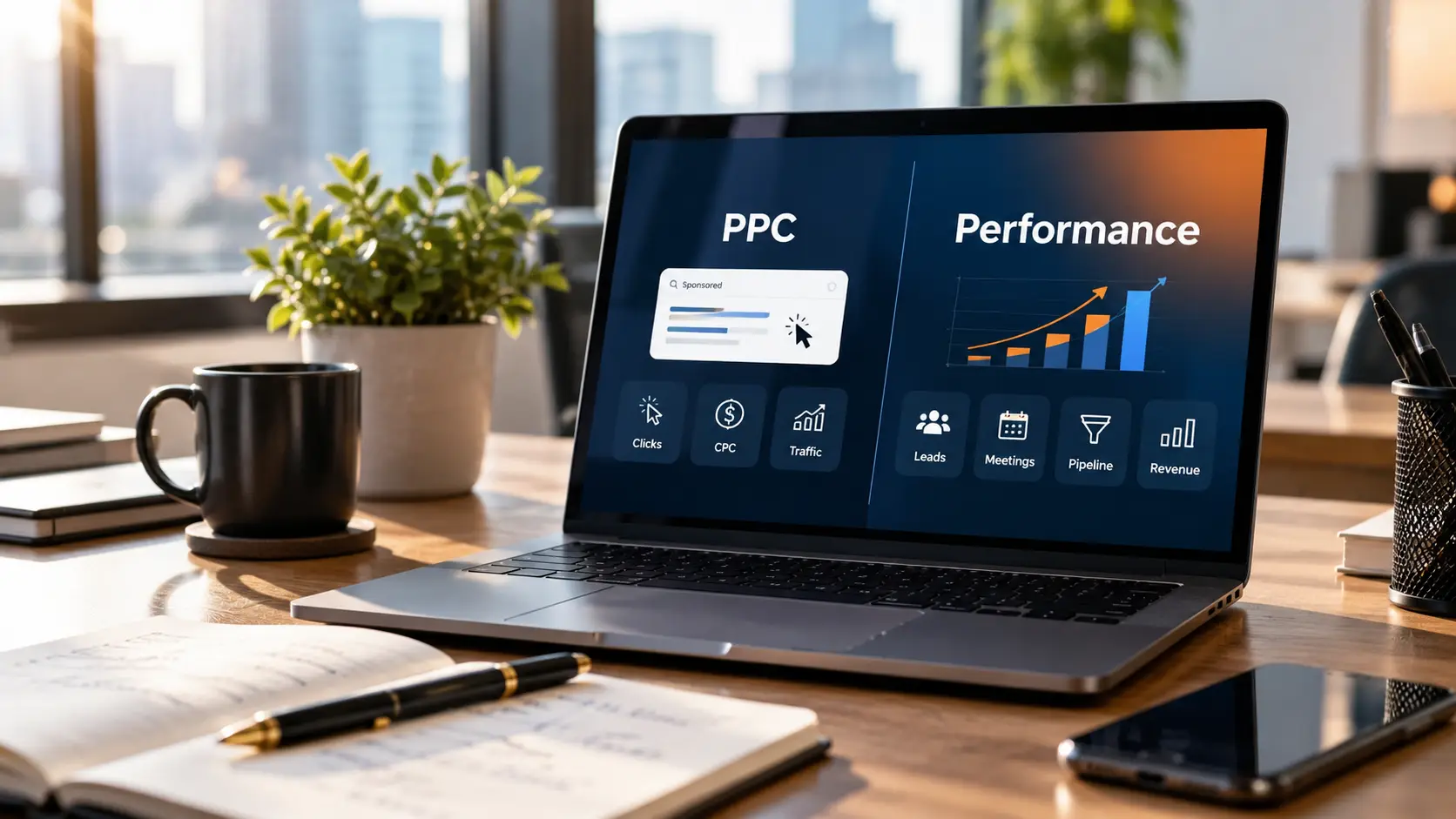
B2B success is measured in qualified leads, meetings booked, pipeline value, and eventually closed revenue - but the timeline between marketing activity and closed revenue can be months. Businesses that apply B2C measurement timelines to B2B programs consistently underestimate what their programs are actually producing.
Frequently Asked Questions
What is the difference between B2B and B2C lead generation?
B2B targets business decision-makers with longer buying cycles, multiple stakeholders, and a greater emphasis on ROI and risk reduction. B2C targets individual consumers with shorter cycles and more personal decision-making criteria. The channels, content, and measurement frameworks differ significantly between the two.
Can the same agency do both B2B and B2C lead generation?
Technically yes, but specialization matters. An agency with deep B2B expertise understands the nuances of professional audience targeting, longer sales cycles, and multi-stakeholder buying processes in a way that generalist agencies often do not.
Does LeadStrong do B2C lead generation?
No. LeadStrong specializes exclusively in B2B lead generation for businesses in Canada, the US, and the UK. This focus means our strategies, channels, and measurement frameworks are built specifically for B2B buying behavior and sales processes.
Which is harder - B2B or B2C lead generation?
They are different rather than one being harder. B2B is more complex due to longer cycles and multiple stakeholders. B2C requires high volume and speed that B2B programs do not. The skills and approaches required are genuinely distinct.
Ready to build a B2B lead generation program with a team that specializes in it?
Book a free strategy call