

Volume is not the problem most businesses have with lead generation. The problem is quality. Forms get filled in by people who are not a fit. Sales teams waste time on prospects who were never going to buy. And marketing spend that looks productive on paper produces pipeline that closes at a fraction of what it should.
Qualified lead generation is a different discipline from raw lead generation. It starts with a much more precise definition of who you are trying to reach, and it builds every channel and campaign around that definition rather than chasing volume.
What Makes a Lead Qualified
A qualified lead is one that meets your defined criteria for a potential customer - not just someone who clicked an ad or downloaded a guide. The criteria vary by business, but they typically include factors like company size, industry, geography, job title of the person you are speaking to, and whether the timing for a purchase is realistic.
The most common framework for B2B lead qualification is BANT: Budget, Authority, Need, and Timeline. A prospect who has a budget for your solution, the authority to make a buying decision, a genuine need your product addresses, and a realistic timeline for moving forward is a qualified lead. Someone who has one or two of those factors but not all four might be worth nurturing, but probably should not be handed directly to sales.
Why Qualification Has to Start Before the Campaign
Most businesses try to qualify leads after they have been generated - in the first sales call. This wastes sales time and skews your marketing data, because you are measuring the success of your campaigns by the volume of leads they produce rather than the quality of those leads.
The businesses generating the best qualified pipeline in 2026 build qualification into the front end of their marketing. The targeting on their LinkedIn and Google campaigns is set up to reach only the right audience. Their landing pages and forms ask questions that filter out poor fits early. And their content is written specifically for the person who is most likely to buy, which naturally attracts more of those people and fewer who are not.
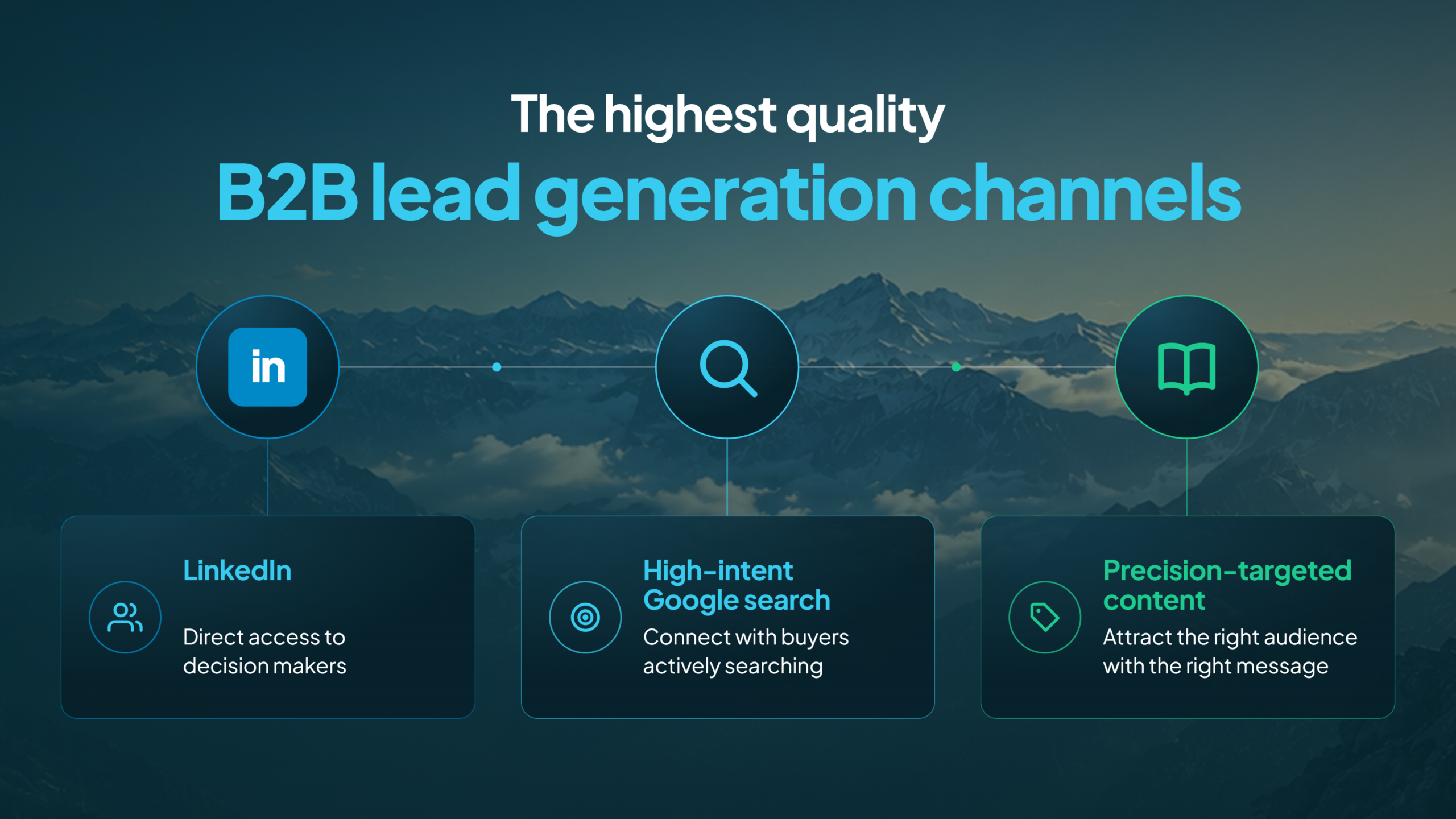
The Channels That Produce the Most Qualified Leads
LinkedIn Advertising
LinkedIn's targeting capabilities make it uniquely effective for qualified B2B lead generation. You can narrow your audience by job title, seniority level, company size, industry, geography, and even specific companies. This means your ads are only shown to people who match your ideal customer profile, rather than being distributed across a broad audience and hoping the right people see them.
The trade-off is cost - LinkedIn CPCs are significantly higher than other platforms. But when the targeting is correct and the offer is relevant, the quality of leads it produces justifies that cost.
Google Search
Intent is everything. A business searching for "outsourced B2B lead generation Canada" is not casually browsing - they are actively looking for a solution. Google Search campaigns that target the right keywords with strong, relevant landing pages produce highly qualified traffic because the prospect has already self-selected by searching for what you offer.
Content That Speaks Directly to the Right Person
Generic content attracts a generic audience. An article titled "What is CRM software?" will bring in a mix of students, researchers, and potential customers who are at very different stages of readiness. An article titled "How mid-sized accounting firms in Canada use CRM to manage client relationships" speaks directly to a specific qualified audience and produces traffic that is far more likely to convert.
The Role of Lead Scoring
As your program scales, lead scoring helps your team prioritize which leads to pursue first. A lead scoring model assigns points based on the prospect's profile - how closely they match your ICP - and their behavior - which pages they have visited, what content they have downloaded, whether they have attended a webinar. Leads above a certain score are passed to sales immediately. Those below it stay in a nurture sequence until they are ready.
What LeadStrong Does Differently
LeadStrong's approach to qualified lead generation starts with a thorough ideal customer profile exercise before any campaign goes live. We use that profile to set precise targeting parameters on every paid channel, write content that speaks directly to your best potential customers, and build qualifying questions into your lead capture forms so the sales team knows exactly what they are dealing with before they pick up the phone.
Every program is measured against qualified leads and pipeline generated, not raw lead volume.
Frequently Asked Questions
What is qualified lead generation?
Qualified lead generation is the process of attracting and capturing leads that match your defined ideal customer criteria - not just anyone who fills in a form, but prospects who have the right profile, a genuine need, and the realistic potential to become a customer.
How do I generate more qualified leads without increasing ad spend?
Better targeting, more specific landing pages, and qualification questions in your lead capture forms all improve lead quality without increasing volume. LeadStrong can audit your current program and identify where the biggest quality improvements are available.
Which channel produces the most qualified leads for B2B?
It depends on your specific ICP, but LinkedIn is consistently the highest-quality channel for B2B businesses because of its targeting precision. High-intent Google Search and well-targeted content close behind it.
Ready to make your business the answer AI search gives?
Book a free strategy call